

Software maintenance outsourcing is the practice of handing post-launch support of a live product — bug fixes, security patches, small enhancements and monitoring — to an external engineering team. It is the least glamorous part of the software lifecycle and, for most companies, the largest share of total cost of ownership.
This guide covers what the scope really includes, how vendors price it in 2026, the SLA clauses that separate a working contract from an expensive one, and a 30-day handover plan you can run without downtime.
Key takeaways
- Maintenance is four different jobs, not one: corrective, adaptive, perfective and preventive work.
- Budget it as a percentage of build cost — most teams plan 15–25% of the original development cost per year.
- The SLA, not the hourly rate, decides quality. Severity levels, response and resolution targets, and escalation paths do the real work.
- Handover is the risk, not the coding. Budget 3–6 weeks of overlap before the incumbent team leaves.
- Preventive work is the cheapest line item you will ever approve, and the first one people cut.
What software maintenance outsourcing actually covers
The international standard for this work, ISO/IEC 14764, splits software maintenance into four categories. Any serious software maintenance outsourcing contract should name all four and say who pays for which.
| Type | What it means | Typical trigger |
|---|---|---|
| Corrective | Fixing defects found in production | Bug report, failed transaction, outage |
| Adaptive | Keeping the system working as its environment changes | OS upgrade, new browser, payment API version change |
| Perfective | Small improvements to features and performance | User feedback, slow queries, new report request |
| Preventive | Reducing the chance of future failure | Dependency upgrades, refactoring, test coverage |
Most disputes we see start here. The client assumed “maintenance” meant everything; the vendor priced only corrective work. Write the four categories into the statement of work and the argument disappears.
What is usually excluded
New modules, redesigns, migrations to a new platform and integrations with a new third party are projects, not maintenance. They belong in a separate change-request process with their own estimate and their own timeline.
A good contract defines a threshold — for example, any request above 16 or 24 engineering hours leaves the retainer and enters change control. Without that line, small requests quietly eat the whole support budget.
Why teams move to software maintenance outsourcing after launch
The build team is the wrong team for year two
Product engineers are expensive and want to ship features. Asking them to spend a third of every sprint on tickets from 2023 is the fastest way to lose them. Maintenance rewards a different profile: methodical, documentation-driven, comfortable in unfamiliar code.
Splitting the two roles is often the real reason companies choose software maintenance outsourcing. The in-house team keeps the roadmap; the outsourced team keeps the lights on and absorbs the interrupt load.
Security patching never sleeps
Vulnerabilities are published continuously in the National Vulnerability Database, and the risks in the OWASP Top 10 mostly reach production through dependencies nobody has upgraded in a year.
The cost of getting this wrong is not theoretical. IBM’s 2024 Cost of a Data Breach report put the global average cost of a breach at USD 4.88 million. A maintenance retainer that includes monthly dependency review is cheap insurance against that number.
Coverage beyond business hours
If your users are in Europe or the United States and your team is not, someone has to answer at 2 a.m. A distributed maintenance team turns that from a heroics problem into a rota — which is also why offshore time zones, handled well, are an advantage rather than a cost.
How software maintenance outsourcing is priced in 2026
Three commercial models dominate. Most mature agreements end up blending the first two: a fixed retainer that guarantees availability, plus a metered pool for larger enhancement work.
| Model | How it works | Best when | Watch out for |
|---|---|---|---|
| Monthly retainer | Fixed fee for a capped bundle of hours and a guaranteed SLA | Stable product, predictable ticket volume | Unused hours expiring each month |
| Time & materials | Pay per hour actually worked | Unpredictable or low ticket volume | No response-time guarantee unless you buy one |
| Per-ticket / outcome | Price per resolved incident or per severity class | High-volume, well-categorised support | Incentive to close tickets, not fix root causes |
The planning heuristic most teams use is 15–25% of the original build cost per year. A product that cost USD 200,000 to build should carry roughly USD 30,000–50,000 of annual support. Push the number up for regulated industries and complex integrations; push it down for a small, well-tested, low-traffic system.
Rates themselves vary widely by region and seniority. Our published Vietnam software outsourcing rates for 2026 show the current bands for support and development engineers, so you can sanity-check any proposal you receive against the market.
The hidden line items
- On-call premium — 24/7 coverage costs meaningfully more than 8×5. Decide what you actually need.
- Environment and tooling — staging environments, monitoring licences and CI minutes are rarely in the headline price.
- Knowledge transfer — the first month is ramp-up. Expect reduced throughput, and do not let anyone promise otherwise.
- Accumulated technical debt — inherited shortcuts slow every ticket. We wrote about the compounding cost in our guide to technical debt in software outsourcing.
The SLA clauses that decide whether it works
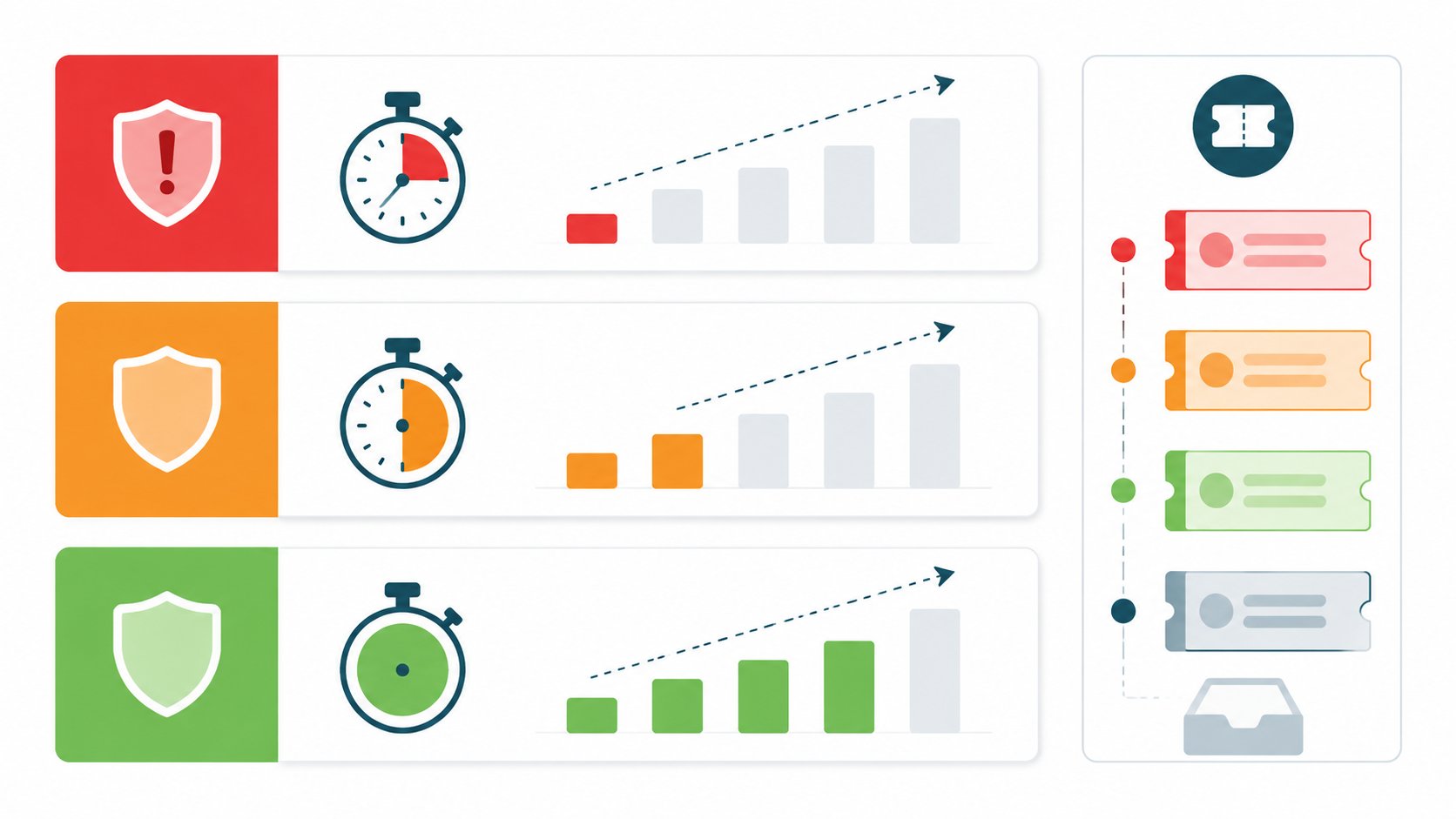
An SLA without severity definitions is decoration. Define the levels in business language — “checkout is down” beats “P1” — and attach two separate clocks to each: time to first response, and time to resolution or workaround.
| Severity | Example | First response | Workaround target |
|---|---|---|---|
| S1 — Critical | Service down, payments failing, data at risk | 15–30 min, 24/7 | 4 hours |
| S2 — High | Major feature broken, no workaround | 2 business hours | 1–2 business days |
| S3 — Medium | Feature degraded, workaround exists | 1 business day | Next release |
| S4 — Low | Cosmetic, minor request | 2 business days | Backlog |
Three more clauses are worth arguing over before signature. First, who classifies severity — the client should, with a vendor right of appeal. Second, measurement: the ticketing system is the single source of truth, and reports arrive monthly whether or not anyone asks.
Third, exit. Name the notice period, the handover artefacts and the fact that all code, credentials and documentation are yours. Access control and IP ownership deserve the same care as in any build contract — see our notes on cybersecurity in software outsourcing.
A 30-day handover plan for software maintenance outsourcing
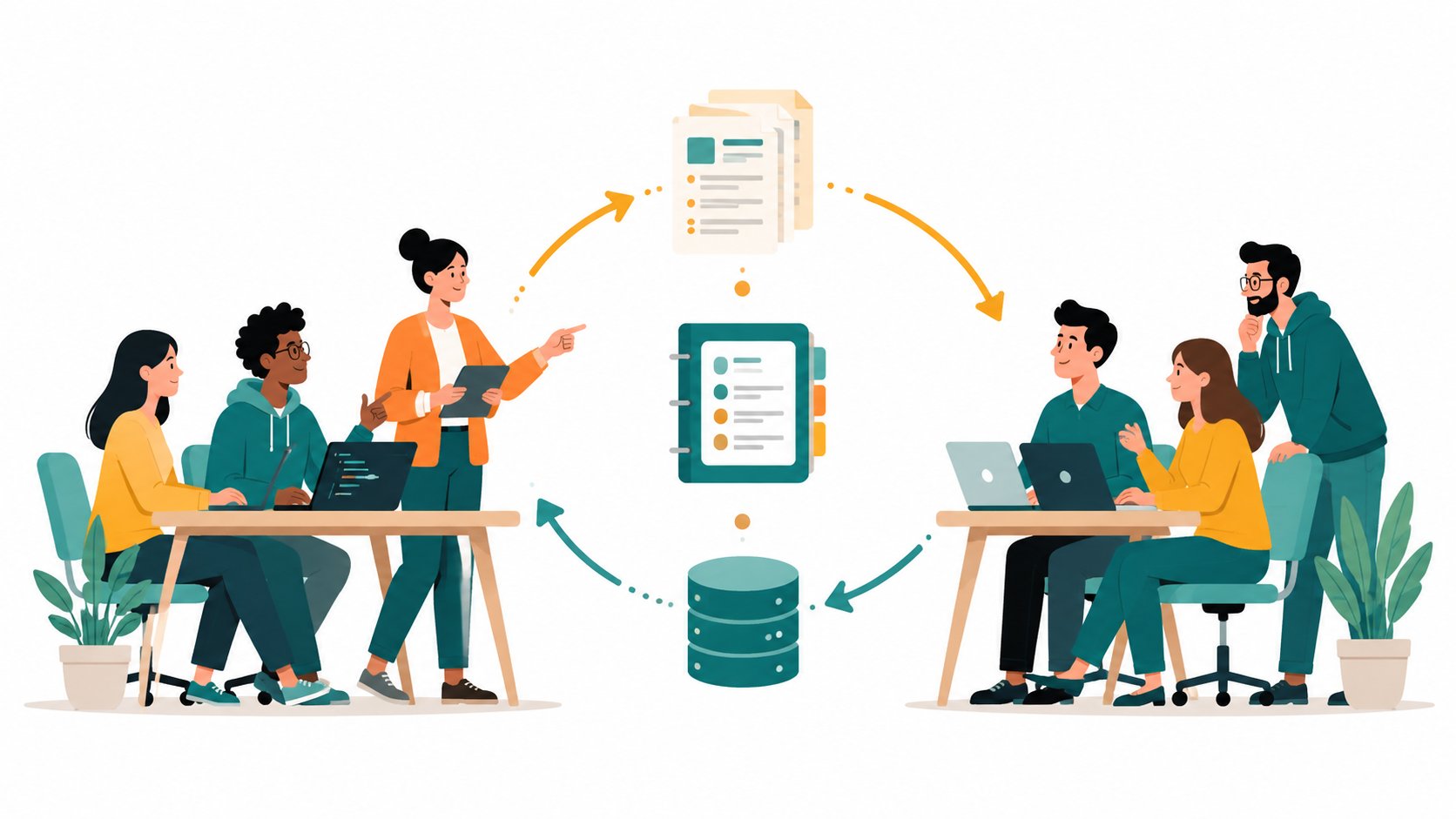
Transition is where these engagements fail. The code is rarely the problem; the undocumented deployment step and the one person who knows why the cron job runs at 03:07 are. Run the handover as a project with its own owner.
Week 1 — Inventory
- Repositories, branches, build pipelines and release process
- Environments, hosting accounts, DNS, certificates and their renewal dates
- Third-party services, licences, and who holds the billing relationship
- Current open tickets, and the last 6–12 months of incident history
Week 2 — Shadowing
- Incoming team observes the incumbent team resolving live tickets
- Runbooks written for the five most frequent incidents
- Monitoring and alerting reviewed: what fires, to whom, and what is simply ignored
Week 3 — Reverse shadowing
- New team takes real tickets with the incumbent reviewing every change
- First deployment executed end to end by the incoming team
- Rollback rehearsed at least once in a non-production environment
Week 4 — Controlled cutover
- SLA clocks start; first-response targets measured from day one
- Credentials rotated and the outgoing team’s access revoked on a named date
- Backlog of preventive work agreed for the first quarter
Where the outgoing team is unavailable, extend week 1 rather than compressing week 3. Discovery on an undocumented system is slow, and pretending otherwise simply moves the delay into your first production incident.
How Tinasoft approaches software maintenance outsourcing
Tinasoft has been building software from Vietnam since 2018. Today we are a team of more than 300 engineers who have delivered 300+ projects for around 100 clients across Japan, Korea, Australia, Singapore and Europe.
Maintenance is a large part of that work, because most of our clients stay well past their first release — our engineer retention is above 90%, which is the practical reason the same people can still answer questions about a system three years after launch.
Our support engagements are built on a simple frame: a named team rather than an anonymous queue, a written SLA with severity definitions agreed up front, a monthly report showing tickets, response times and preventive work completed, and a fixed retainer with a transparent change-request path for anything larger.
For teams that need both support and continued development, the same structure scales into a dedicated offshore development center, where maintenance and roadmap work sit side by side under one contract.
FAQ about software maintenance outsourcing
How much does software maintenance outsourcing cost per year?
Plan 15–25% of the original build cost annually. A retainer for a small business application typically starts in the low thousands of dollars per month; complex, regulated or 24/7 systems cost considerably more. See our 2026 rate card for current engineer bands.
Can we outsource maintenance of software someone else built?
Yes, and it is the most common scenario. It requires a proper discovery phase — typically two to four weeks of code review, documentation and environment mapping before any SLA commitment is realistic.
What is the difference between maintenance and support?
Support is the front door: receiving, triaging and answering user issues. Maintenance is the engineering work behind it — fixing, patching, upgrading and improving the code. Most contracts bundle both, but they are different skills and should be staffed accordingly.
Will outsourcing maintenance mean losing control of our product?
Not if the contract is written properly. Keep ownership of repositories, cloud accounts and domains in your own name, insist on documentation as a deliverable, and require a defined exit process. The vendor should be replaceable in principle, even if you never use that option.
How long should a maintenance contract run?
Twelve months is standard, with a 30–90 day notice period. Shorter terms rarely repay the ramp-up cost for either side; longer ones should include an annual review of scope, SLA performance and pricing.
Getting started
Software maintenance outsourcing works when the scope names all four maintenance types, the SLA defines severity in business terms, and the handover is treated as a project rather than an email. Get those three right and the rest is routine engineering.
If you are budgeting post-launch support for 2026, start with real numbers rather than estimates. See our transparent 2026 pricing → — the page includes a quote form and we respond within 24 hours.