
Discover why businesses are investing in super app platform in 2026. Learn key benefits, features, and how super apps drive growth and user retention.
In today’s digital economy, businesses are no longer competing with just products or services—they are competing for user attention and engagement.
Traditional mobile apps often struggle with low retention rates, fragmented user experiences, and limited scalability. As a result, many forward-thinking companies are shifting toward a more powerful solution: the super app platform.
By 2026, super apps are expected to become a dominant digital strategy, especially in fast-growing markets like Southeast Asia. But what exactly makes a super app so valuable—and why should your business invest in one now?
What Is a Super App Platform?
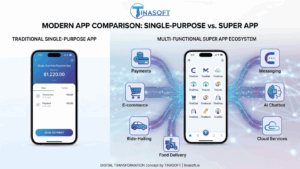
A super app platform is a digital ecosystem that integrates multiple services into a single application. Instead of using separate apps for messaging, payments, shopping, or entertainment, users can access everything in one place.
Think of it as a “platform of platforms”—where different services are seamlessly connected to create a unified experience.
Typical super app services include:
- Digital payments and wallets
- Messaging and communication tools
- E-commerce and marketplaces
- Content and entertainment
- On-demand services
This integrated approach transforms a simple app into a full-service digital ecosystem.
Why Super Apps Are Dominating in 2026
The rise of super apps is not a trend—it’s a response to changing user behavior.
1. Users Want Convenience
Modern users expect everything to be fast, simple, and accessible in one place. Switching between multiple apps creates friction and reduces engagement.
Super apps eliminate this friction by offering a seamless, all-in-one experience.
2. Mobile-First Markets Are Growing Fast
In regions like Southeast Asia, users often skip desktop experiences entirely and rely on mobile for everything—from payments to entertainment.
This makes super apps the ideal model for capturing and retaining mobile users.
3. Businesses Need Ecosystems, Not Just Apps
A single app can solve one problem.
A super app creates an entire ecosystem of services that keeps users engaged over time.
Key Benefits of a Super App Platform
1. Increased User Retention
One of the biggest challenges for businesses is keeping users active.
Super apps solve this by integrating high-frequency services such as messaging, payments, and entertainment. These features encourage users to return daily.
The more time users spend inside your ecosystem, the more opportunities you have to deliver value.
2. Higher Revenue Opportunities
With multiple services in one platform, businesses can unlock new revenue streams:
- Transaction fees
- Subscription services
- Advertising
- Cross-selling and upselling
Instead of relying on a single product, you can monetize across the entire user journey.
3. Seamless User Experience
Super apps reduce friction by connecting services:
- One login across all features
- Unified user data
- Faster checkout processes
This leads to better user satisfaction and higher conversion rates.
4. Stronger Customer Insights
By operating multiple services in one ecosystem, businesses gain access to richer user data.
This allows for:
- Personalized recommendations
- Better decision-making
- More effective marketing strategies
5. Scalable Digital Growth
A super app platform is designed to grow with your business.
You can start with core features and gradually expand by adding new services without building everything from scratch.
Essential Features of a Super App Platform
To build a successful super app in 2026, your platform should include:
1. Unified Authentication (SSO)
A single sign-on system ensures users can access all services without repeated logins.
2. Integrated Payment System
A secure and flexible payment solution is critical for enabling transactions across services.
3. Messaging & Communication Layer
Built-in chat features help users interact, receive notifications, and access customer support.
4. Content & Engagement Layer
Entertainment content such as music or video helps increase session time and user retention.
5. Modular Architecture
A scalable backend that allows you to add or update services without disrupting the entire system.
Super App Use Cases Across Industries
Telecommunications
Telecom companies use super apps to offer:
- Digital services for subscribers
- Payments and top-ups
- Entertainment content
Enterprises
Businesses can build internal super apps to:
- Improve employee productivity
- Centralize tools and communication
- Streamline operations
E-commerce Platforms
Super apps enable:
- Integrated shopping experiences
- Faster checkout
- Better customer engagement
Challenges to Consider
While super apps offer many benefits, there are also challenges:
- Technical complexity: Requires strong architecture and integration capabilities
- User adoption: Needs a clear value proposition
- Data security: Must ensure user data protection
However, with the right technology partner, these challenges can be effectively managed.
How to Get Started with a Super App Platform
If your business is considering a super app strategy, here are the first steps:
- Identify your core services
- Define your target users
- Choose a scalable technology platform
- Start with a minimum viable product (MVP)
- Expand based on user behavior and feedback
Conclusion
In 2026, businesses are no longer just building apps—they are building ecosystems.
A super app platform enables companies to:
- Increase user retention
- Unlock new revenue streams
- Deliver seamless digital experiences
As competition intensifies, the question is no longer whether your business needs a super app—but how soon you can build one.
🌐 Website: [Tinasoft]
📩 Fanpage: Tinasoft Vietnam