
As we look toward 2025, the landscape of AI development will radically transform how software is created and delivered. These trends will not only influence software functionality but also enhance user experiences and operational efficiency. Here are the key AI development trends anticipated to shape the future of software.
1. Increased Automation
Overview
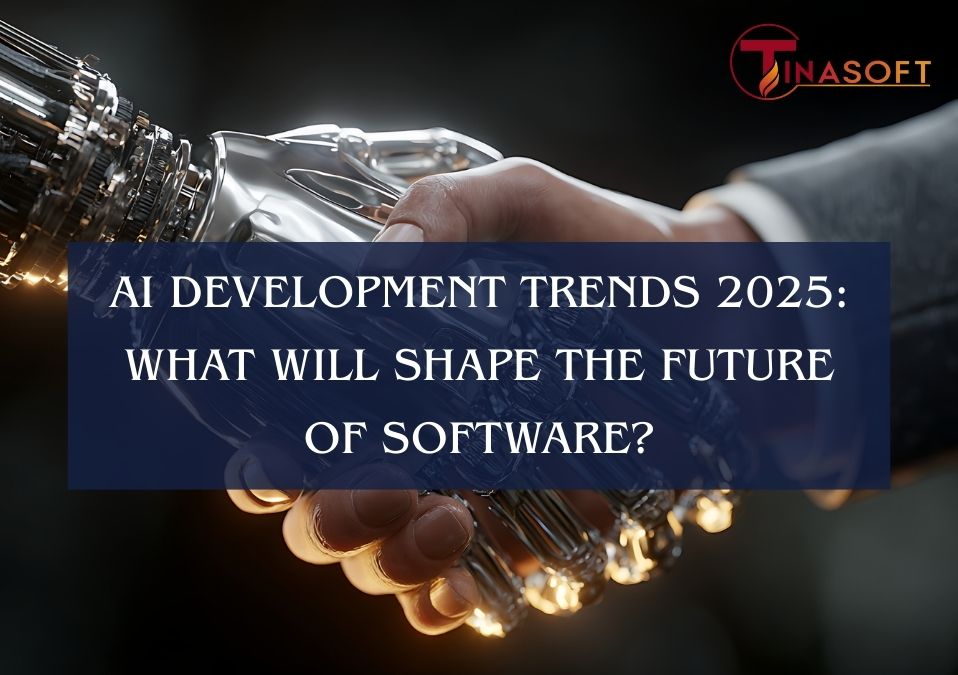
AI development will significantly enhance automation in software creation, making processes more efficient.
Key Features
- Automated Code Generation: Tools empowered by AI will generate code based on high-level requirements, reducing manual coding tasks.
- Intelligent Testing: AI-driven testing frameworks will quickly identify bugs and optimize quality assurance.
Benefits
- Boosted Productivity: Automating routine tasks allows developers to focus on more complex aspects of software design.
- Faster Time-to-Market: Enhanced automation will speed up development cycles, facilitating quicker software rollouts.
2. Advancements in Natural Language Processing (NLP)
Overview
Progress in NLP will enable more intuitive interactions in AI development, making software more user-friendly.
Key Features
- Conversational Interfaces: AI will facilitate chatbots and virtual assistants that can engage users in natural language.
- Contextual Understanding: Enhanced NLP will allow software to understand context and intent, leading to personalized user experiences.
Benefits
- Improved User Engagement: More intuitive interfaces will enhance user satisfaction and adoption.
- Easier Navigation: Natural language interactions will lower the learning curve for users.
3. Ethics and Governance in AI Development
Overview
With the proliferation of AI, ethical considerations and governance frameworks will become critical in AI development.
Key Features
- Fair and Transparent AI: Developers will focus on creating algorithms that are unbiased and accountable.
- Regulatory Compliance: Organizations will adhere to emerging regulations governing AI use.
Benefits
- Increased Trust: Ethical AI practices will enhance user trust and foster positive relationships with technology.
- Risk Mitigation: Proactively addressing ethical concerns will help prevent significant issues.
4. Personalization Through AI Development
Overview
AI development will enable more personalized software solutions that cater to individual user needs.
Key Features
- Predictive Analytics: AI will analyze user data to offer customized recommendations and features.
- Dynamic Adaptation: Software will adjust in real time to user behaviors and preferences.
Benefits
- Higher User Satisfaction: Personalization will improve the relevance of interactions and overall experiences.
- Improved Retention Rates: Tailored solutions will encourage users to stay engaged.
5. AI Development and Edge Computing Integration
Overview
Combining AI development with edge computing will facilitate faster data processing and decision-making.
Key Features
- Real-Time Processing: AI will process data at the edge, minimizing latency for applications like IoT.
- Resource Optimization: Edge computing enables efficient bandwidth and computing resource usage.
Benefits
- Enhanced Performance: Immediate data processing will improve application responsiveness.
- Cost Efficiency: Optimized resource use will lower operational costs related to data handling.
6. AI Development Focus on Cybersecurity
Overview
As cyber threats evolve, AI development will play a vital role in enhancing security measures.
Key Features
- Anomaly Detection: AI will monitor network traffic and user behaviors to identify potential security risks.
- Automated Incident Response: AI will automate responses to security incidents, allowing for immediate action.
Benefits
- Proactive Security: Leveraging AI enables organizations to predict and prevent cyber threats.
- Faster Response: Automation reduces the impact of breaches by addressing issues promptly.
Conclusion
In 2025, AI will continue to reshape the software landscape, driving innovations in automation, user interaction through NLP, ethical considerations, personalization, edge computing integration, and strengthened cybersecurity. By anticipating and adapting to these trends, organizations can position themselves for success in a rapidly evolving technological environment. As AI development progresses, it promises to enhance efficiency, improve user experiences, and foster meaningful interactions between users and technology.
🌐 Website: [Tinasoft]
📩 Fanpage: Tinasoft Vietnam